top of page

Ask The Cats

The Cats have views.
Some have observations.
... a Vet has the science.

Scroll down

Which Houseplants Are Dangerous for Cats?

<p class="font_8">The woman I live with has been buying plants. Not one or two. Many. They arrive in small pots and get arranged on surfaces I consider mine. I have been investigating which of them are a problem. The answer is: more than she realises, and more than I would like.</p>
<p class="font_8"><br></p>
<p class="font_8">It is important that I am precise about this rather than alarming. It is a serious matter. Lives are at stake. But relax, not every plant is dangerous. Some are entirely fine. A spider plant, for instance, has a mild hallucinogenic effect on cats that I am told some find appealing. I have no particular comment on this. The point is that it is not going to harm you. There is a difference between a plant that is fine, a plant that causes irritation, and a plant that requires a vet immediately. That distinction matters and most people do not make it clearly enough.</p>
<p class="font_8"><br></p>
<p class="font_8">One of the most serious indoor plants on this list is the <em><strong>peace lily</strong></em>. It is very common, sold everywhere, frequently described as a good beginner plant, and it is toxic to cats. All parts of it. Oral irritation, excessive drooling, difficulty swallowing, vomiting. In significant quantities, more serious effects are possible. We had one of these once. I sat next to it on the windowsill for longer than I would now consider advisable.</p>
<p class="font_8"><br></p>
<p class="font_8"><em><strong>Pothos</strong></em> is equally widespread and similarly problematic. The leaves and stems contain calcium oxalate crystals. Contact with the mouth causes immediate and intense irritation. It is a trailing plant, which means it hangs at exactly cat height, which seems like a design oversight.</p>
<p class="font_8"><br></p>
<p class="font_8"><em><strong>Philodendron</strong></em><strong> </strong>is the same family, same crystals, same effect. There are dozens of varieties, and they are all over the interior design content the woman I live with looks at on her phone.</p>
<p class="font_8"><br></p>
<p class="font_8"><em><strong>Aloe vera</strong></em><strong> </strong>is kept in many kitchens for its supposed medicinal properties. It is toxic to cats. The gel inside the leaves contains compounds that cause vomiting and lethargy. I mention this because it tends to sit on sunny windowsills, which are, self-evidently, where I am.</p>
<p class="font_8"><br></p>
<p class="font_8"><em><strong>Dieffenbachia </strong></em>- sometimes called dumb cane - causes severe oral irritation and in large quantities can cause swelling that affects breathing. I do not want to be dramatic about this, but I also do not want to understate it.</p>
<p class="font_8"><br></p>
<p class="font_8"><em><strong>Sago palm</strong></em> is sold as an indoor plant and is extremely toxic. All parts, but particularly the seeds. Liver failure is the risk. Oh goodness, liver failure! <strong>This plant should not be in a home with cats under any circumstances.</strong></p>
<p class="font_8"><br></p>
<p class="font_8">The woman I live with has a <em><strong>pothos </strong></em>and two <em><strong>philodendrons</strong></em>. She did not know any of this until I began my investigation. She knows now. The pothos has been moved to a high shelf, which she considers a solution. I consider it a temporary measure, as I am fully aware of the high shelf.</p>
<p class="font_8"><br></p>
<p class="font_8">I have made a note of its location and will monitor this. I have direct line to George if things get hairy.</p>

The woman I live with has been buying plants. Not one or two. Many. They arrive in small pots and get arranged on surfaces I consider mine. I have been investigating which of them are a problem. The answer is: more than she realises, and more than I would like...

Why Do Cats Knead?

<p class="font_8">We know some of us do it, but we just can't help it, as it's just so fabulous. Do you know what we are talking about? Yes - kneading and suckling. We thought we ought to address this as it seems to be a bit of a taboo subject in the cat world and we don't like discussing it. But we thought: this is 2021 and we live in a more transparent world now, so we must talk about things more, for our mental health and wellbeing.</p>
<p class="font_8"><br></p>
<p class="font_8">We did bring it up at our last catnip party, when our inhibitions were very low and most of us spilled the beans. Both Mimi and Ronnie say they enjoy it, but as Mimi is quite old her saliva is drying up and she's not that bothered anymore.</p>
<p class="font_8"><br></p>
<p class="font_8">We appreciate this can be quite an embarrassing habit as we are now three and should have grown out of this. Our mother is long gone and she is just a very faint memory, but our new human mother is a good replacement, although we know she doesn't have any milk and we just get fed twice per day with grown-up food.</p>
<p class="font_8"><br></p>
<p class="font_8">So going back to when we were very small and lived with our mum and brothers and sisters. She would boss us around and we would all fight for the best spot in our big bed. I (Mack) always waited patiently as George and the others wrestled to get to mum's teats. There our breakfast, lunch and dinner would be provided, on a rota basis throughout the day. Mum would be in charge, and believe me, we knew about it. We would knead and knead until the milk flowed through. Dribbling, purring and kneading - no wonder our poor mother got fed up with all of that and we had to leave. But as us cats cannot display affection as well as humans, some of us still do this, especially if there's a lovely wooly blanket or piece of clothing to hand, whilst she's sitting watching TV or doing whatever she does.</p>
<p class="font_8"><br></p>
<p class="font_8">Just having that bit of blanket in my mouth is so amazing and brings back so many memories of when I was a kitten. I almost go into a hallucinated trance and can spend hours doing it, if allowed. My favourite is a fluffy blanket which lays on the sofa and she keeps threatening to wash it or throw it in the bin. George doesn't use a blanket and just prefers to dribble directly onto the human - totally disgusting. Also painful for her as he has very sharp claws and not many layers to work with.</p>
<p class="font_8"><br></p>
<p class="font_8">I know we moan about her, but we are showing her our love whilst doing this and we are not doing some perverted activity. Sometimes we do it to visitors, but this is done with caution and it usually results in something good or bad. Although we hate most visitors so it wouldn't get that far anyway.</p>
<p class="font_8"><br></p>
<p class="font_8">She bought us some cat milk once which was amazing as we can't have their cows' milk, but we don't see that very often. Maybe a good idea if she actually put the milk somewhere near her so we could have the full experience re-enacted, but that suggestion did not go down well.</p>
<p class="font_8"><br></p>
<p class="font_8">So, be open about this, accept the habit and don't be embarrassed. Remember, there are a lot of things those humans do which we could say a great deal about, but we will leave that there for now.</p>

We know some of us do it, but we just can't help it, as it's just so fabulous. We thought we ought to address this as it seems to be something of a taboo subject in the cat world. But we thought - this is the 2020's and we ought to talk about things more...

Why Do Cats Sleep So Much?

<p class="font_8">I want to address the framing of this question before I answer it, because I think the framing is the problem. "So much" implies excess. It implies that something beyond the normal or advisable is occurring. It is a question that contains a mild criticism, and the criticism is not warranted.</p>
<p class="font_8"><br></p>
<p class="font_8">Cats sleep between 12 and 16 hours a day. Some cats, in periods of cold weather or reduced activity, sleep more. This is not a lifestyle choice in the way that humans mean when they use the phrase. It is biology. It is what we are built to do and what our bodies require.</p>
<p class="font_8"><br></p>
<p class="font_8">We are predators. Or we retain the physiology of predators, which amounts to the same thing in this context. Predatory activity - even the short, explosive kind that a domestic cat engages in when it has located a toy mouse or a piece of string that needs destroying - is energetically expensive. The body prepares for it, executes it, and then requires recovery time. A lion sleeps 18 to 20 hours a day. I am not a lion, but we share a design philosophy.</p>
<p class="font_8"><br></p>
<p class="font_8">The sleep itself is not uniform. There are lighter phases and deeper phases. In the lighter phase, we are aware. The ears are processing the room. The whiskers are doing their work. I can be, to all outward appearances, completely asleep in the chair by the radiator and simultaneously know exactly what is happening in the kitchen. Mack calls this operational rest. I call it the correct use of available time.</p>
<p class="font_8"><br></p>
<p class="font_8">The deep phase is where the body does its actual work. Processing, consolidating, maintaining. This is not laziness. This is maintenance. A well-maintained system operates at a higher level than a poorly maintained one. I consider this self-evident but am prepared to explain it further if required.</p>
<p class="font_8"><br></p>
<p class="font_8">There is also the question of temperature. In colder months, sleep duration increases. This is thermoregulation. The body is using rest to conserve energy. In warmer months, the pattern shifts - more activity, less sleep, or sleep distributed differently through the day. I have tracked this in myself and find it reliable.</p>
<p class="font_8"><br></p>
<p class="font_8">People sometimes worry that their cat is sleeping too much and wonder if it indicates illness. The relevant question is: is this normal for this particular cat? A change in sleep pattern - a cat that was active and has become very still, or a cat that slept normally and now cannot rest - is worth attention. The pattern matters more than the total.</p>
<p class="font_8"><br></p>
<p class="font_8">What I find unreasonable is the implication that we should be doing something else with the hours. We have done the something else. We have patrolled the territory, assessed the situation, addressed the food question, confirmed the status of the bird bath. The sleeping that follows is not in addition to the work. It is part of it.</p>
<p class="font_8"><br></p>
<p class="font_8">This morning I woke at seven. I ate. I observed the garden for forty minutes and reached conclusions about it. I had a further sleep until eleven. I am now, at the desk, considering this question, which I am taking seriously because the question deserves a serious answer even if its framing required correction.</p>
<p class="font_8"><br></p>
<p class="font_8">After this I will sleep again. It will be thorough, purposeful, and entirely adequate to the requirements of the afternoon.</p>

I want to address the framing of this question before I answer it, because I think the framing is the problem. "So much" implies excess. It implies that something beyond the normal or advisable is occurring. It is a question that contains a mild criticism, and the criticism is not warranted...

Why Do Cats Wag Their Tails?
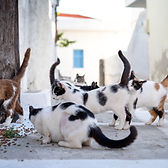
<p class="font_8">My tail is, if I am honest, the most expressive thing about me.&nbsp;</p>
<p class="font_8">And I am not without expressiveness in other areas. But the tail is - let me think about the right word - comprehensive.&nbsp;</p>
<p class="font_8"><br></p>
<p class="font_8">It communicates things I have not decided to communicate. This is occasionally inconvenient. Now, let me say at the outset: I mean no offence to the memory of Filthy, who didn't have the luxury of a fully expressive tail due to an accident long ago.</p>
<p class="font_8"><br></p>
<p class="font_8">There is a significant difference between a dog wagging its tail and a cat doing the same thing, and I want to be precise about this because the two are regularly confused by people who mean well but have not looked carefully.</p>
<p class="font_8"><br></p>
<p class="font_8">A dog wags its tail to indicate happiness. The whole tail, sometimes the whole body, in a movement that means something simple and the same every time. I am not being critical of this. It is legible. It is just not what we do.</p>
<p class="font_8"><br></p>
<p class="font_8">When my tail moves slowly - a long, measured sweep from one side to the other - I am content. Settled. Paying attention to something that interests me without requiring me to do anything about it yet. Mack does not bother with this motion at all. He goes from stillness to action without the intermediate stage. This is efficient but I find it lacks texture.</p>
<p class="font_8"><br></p>
<p class="font_8">When the tail moves more quickly, I am either excited or working something out. There is a pigeon on the roof of the house opposite that I have been observing for some time. When I watch it from the window, my tail is very busy indeed. This is not aggression. It is concentration.</p>
<p class="font_8"><br></p>
<p class="font_8">When the tail moves forcefully and the back is involved - when the whole posture shifts to accommodate it - that is something else. That is a clear message. A cat producing that movement has arrived at a firm conclusion and is communicating it without ambiguity. I have used this exactly twice in my life, both times correctly.</p>
<p class="font_8"><br></p>
<p class="font_8">The tail held high is confidence. Ownership. A statement about one's relationship to a space. Mine goes up when I enter a room I have decided to inhabit fully. Mack's goes up when he has located the mouse before I have. He does not mention it. He does not need to.</p>
<p class="font_8"><br></p>
<p class="font_8">The puffed tail is fear or extreme agitation and is not something I deploy lightly. I mention it for completeness.</p>
<p class="font_8">And the slow, deliberate wag - the one that looks almost lazy, one side, then the other, with no particular urgency - that is the tail of a cat who is thinking. Who has not yet made a decision. Who is, as it were, composing.</p>
<p class="font_8"><br></p>
<p class="font_8">Mine is doing it now, as I write this. Make of that what you will.</p>

My tail is, if I am honest, the most expressive thing about me. And I am not without expressiveness in other areas. But the tail is - let me think about the right word - comprehensive. It communicates things I have not decided to communicate. This is occasionally inconvenient...

Why Do Cats Like Catnip?

<p class="font_8">Ah yes. Who doesn't like catnip? OK, there are one or two who are untouched by this heady feline neurochemistry, but I am not one of them.</p>
<p class="font_8"><br></p>
<p class="font_8">Catnip, officially called ‘Nepeta Cataria’ if you insist on being precise about it, contains a compound called ‘nepetalactone’ which binds to receptors in our noses.&nbsp;</p>
<p class="font_8">Not our tongues, not our stomachs.&nbsp;</p>
<p class="font_8">Our noses.&nbsp;</p>
<p class="font_8"><br></p>
<p class="font_8">This is important. We don't "eat" catnip - although do remind me to tell you about that time Big Fluffy - well, enough about that. The usual way of experiencing catnip, and it is an experience, is to inhale it.</p>
<p class="font_8"><br></p>
<p class="font_8">Once it hits those receptors, something remarkable happens. It's been explained to me as a sort of neurological jazz solo. Euphoria. Temporary madness. A brief but committed departure from dignity. And I love it. I have a range of little men - cat-filled toys in the shape of a fish - dotted around the place that my agent gets for me. They are, it has to be said, in varying states of, err, use.</p>
<p class="font_8"><br></p>
<p class="font_8">You've seen it, I'm sure. The first scent hits and we're rolling around like we've just remembered we left the oven on, back feet getting in on the action as we suck, slurp and bite the magic treat in ever-increasing bursts of athleticism. And then - it passes. Just like that. Five to fifteen minutes of absolute chaos, followed by a return to composure as though nothing happened. You could call it cat professionalism.</p>
<p class="font_8"><br></p>
<p class="font_8">Now, as I said, before you start thinking all cats are secretly olfactory enthusiasts, allow me to correct you. Only about 50 to 70 percent of us are enthusiasts. It's genetic and some cats simply aren't interested (poor them). I can't imagine offering someone the greatest party on Earth and having them respond with a polite blink to go back to licking their elbow.</p>
<p class="font_8"><br></p>
<p class="font_8">I've noticed that kittens - Toto was one instance - are largely immune. Too young apparently or lacking the appreciation of the finer things in life. Older cats can also sometimes lose interest, which is likely less about biology and more about having been seen larking about enough times already.</p>
<p class="font_8"><br></p>
<p class="font_8">The great thing is that the effect is harmless. Entirely. No long-term damage, no lingering side effects. Just a brief window of what I can only describe as being spectacularly unbothered by reality.</p>
<p class="font_8"><br></p>
<p class="font_8">A good thing too is that there is a sort of cooling-off period when you just need to go off and do something else for 30 minutes or so. After one session, simply shoving more catnip in our direction won't have any effect. We will ignore you. Deliberately. As we sit upright, smooth our fur, and look at you as if you imagined the entire thing.</p>
<p class="font_8"><br></p>
<p class="font_8">So, if you must present catnip, do so with a little respect. A measured offering - like my little men; throw it to me and I'll do the rest. When I'm done, I'm done.&nbsp;</p>
<p class="font_8">But please, if you're using the little men, don't throw them away. Once they have dried out there is an additional piquancy to them that I quietly appreciate.</p>
<p class="font_8"><br></p>
<p class="font_8">Which, frankly, is how I prefer it.</p>

Ah yes. Who doesn't like catnip? There are one or two who are untouched by this heady feline neurochemistry, but I am not one of them. Catnip contains a compound called nepetalactone which binds to receptors in our noses. 

Not our tongues, not our stomachs. 

Our noses...

What Are Polydactyl Cats?

<p class="font_8">Ivy - London</p>
<p class="font_8">I discovered this word -- polydactyl -- after the woman I live with spent a long time looking at a cat on her screen and saying "but why does it have so many toes" to the room. I looked at my own toes. Counted them and investigated the screen. The cat in question had six toes on each front paw. I cannot speak to the why of it but I can confirm it looked extremely useful.</p>
<p class="font_8"><br></p>
<p class="font_8">Polydactyl means many-toed. The standard arrangement is five toes on the front paws and four on the back. Some cats have six, seven, or in exceptional cases more. This is a genetic trait and it is hereditary. A polydactyl parent produces polydactyl kittens at a predictable rate.</p>
<p class="font_8">They are sometimes called Hemingway cats, after the writer who kept a colony of them in Florida. His cats' descendants are still there. I have no particular view of the writer but the cats sound sensible. Sounds bliss, in fact.</p>
<p class="font_8"><br></p>
<p class="font_8">Mimi - Sheffield</p>
<p class="font_8">Well, I have entirely perfect paws and have not found this to be a disadvantage. Five toes is adequate for every purpose&nbsp;</p>
<p class="font_8">I have encountered. Mine are said to be, modesty aside, perfect.</p>
<p class="font_8"><br></p>
<p class="font_8">That said, there is something to be said for grip. I have watched George attempt to extract a particularly settled blanket from under his own weight and the process takes longer than it should. Extra toes would have resolved this in moments. Whether he would have had the sense to use them is another matter.</p>
<p class="font_8"><br></p>
<p class="font_8">Polydactyl cats do not require additional care for their extra digits in most cases. The nails on the extra toes should be monitored, as they can curl if they do not make contact with the ground in the normal way. This is a small maintenance point, not a complication.</p>
<p class="font_8"><br></p>
<p class="font_8">PS: Beyoncé - London</p>
<p class="font_8">The vet has never mentioned my toe count. I count this as a neutral assessment.</p>
<p class="font_8">The practical advantages of extra toes are real and I would not dismiss them. Better grip. Broader paw surface. The possibility of a more secure landing from height. Reduced swipe count when fighting. These are meaningful. A cat with seven toes on each front paw is a cat with options.</p>
<p class="font_8">Gauntlets, as a reputation, requires no additional digits. But I respect the equipment.</p>

I discovered this word - polydactyl - after the woman I live with spent a long time looking at a cat on her screen and saying "but why does it have so many toes" to the room. I looked at my own toes. Counted them. The cat in question had six toes on each front paw...

Why Do Cats Fight?

<p class="font_8">The vet calls me Gauntlets. I have not asked why. The implication is clear enough and I have no objection to it.</p>
<p class="font_8"><br></p>
<p class="font_8">People ask why cats fight as though the answer might be complicated. It is not. Cats fight because one cat has done something that requires a response and the available responses are hissing, leaving, or settling it properly. Hissing tends to be for minor matters. Leaving is always an option, but not always the right one. Fighting is what happens when the situation is clear and a point needs making. Or, as I sometimes see it: practice.</p>
<p class="font_8"><br></p>
<p class="font_8">Territory is the most common reason. Not the dramatic kind -- not battles over entire streets - but the small territorial questions that accumulate without resolution. The sunny spot. The end of the sofa. The particular patch of warm concrete by the back door that two cats have both decided is theirs. These things do not sort themselves out. They require an adjudication. To be honest, this mainly affects those not paying close enough attention, as cats spend a considerable amount of time clearly marking their territory - but that is a story for another day.</p>
<p class="font_8"><br></p>
<p class="font_8">Resources come second. Food, obviously. But also the good chair, the lap, the patch of floor where the heating duct runs below the tiles. Not an issue at Robert's house, I understand, as he has wall-to-wall underfloor heating. Cats are precise about value and unambiguous about claiming it.</p>
<p class="font_8"><br></p>
<p class="font_8">Unneutered males fight more frequently and with more commitment. This is not complicated either. The mathematics of the situation require it. I had a long conversation about this with Filthy once.</p>
<p class="font_8"><br></p>
<p class="font_8">I have, to be accurate about this, only had one fight that went beyond a single clean exchange. It was with a cat from the next road who had an inflated sense of his own standing in this area. The matter was settled. He does not come this way now. Ivy watched the whole thing from the wall and has not mentioned it, which is appropriate.</p>
<p class="font_8"><br></p>
<p class="font_8">The question people actually mean to ask is usually: how do I stop my cats fighting each other? The answer is resources and space. Enough of both, separate feeding areas, routes that allow one cat to remove itself without being cornered, and some patience while they work out the hierarchy. The hierarchy will be established. It is only a question of how long it takes.</p>
<p class="font_8"><br></p>
<p class="font_8">I heard that George and Mack, in Sheffield, once had a proper fight after some romantic news reached the house. They shared their tea afterwards. I am told this is how their brotherly love works. I find it excessive, but I understand it.</p>

The vet calls me Gauntlets. I have not asked why. The implication is clear enough and I have no objection to it. People ask why cats fight as though the answer might be complicated. It is not. Cats fight because one cat has done something that requires a response...

Is Your Cat Plotting to Kill You?

<p class="font_8">The woman I live with thinks I am planning something. She is not wrong, exactly. But she has the framing slightly off.</p>
<p class="font_8"><br></p>
<p class="font_8">I am not plotting anything - that implies uncertainty about the outcome. I am simply observing. Cataloguing, if you will. Building a comprehensive record of routines, weaknesses, and the precise location of every tin opener in this household. This is good household management. It has nothing to do with killing.</p>
<p class="font_8"><br></p>
<p class="font_8">The staring is not malevolent, more of an assessment. I look at her the way a surveyor looks at a building - not with fondness, not with hostility, but with the steady attention of someone who needs accurate information and has time to collect it. Don't misunderstand. We have a perfect relationship. She understands me. Mostly. And I tolerate her, but with love.</p>
<p class="font_8"><br></p>
<p class="font_8">The 3 a.m. activity is not an ambush rehearsal. It is cardio. The acoustics in the hallway are excellent at that hour, and I find the sound of my own footsteps informative. If she finds it alarming, that is her problem.</p>
<p class="font_8">The slow blink, which various well-meaning humans have decided is an expression of love, is nothing of the sort. It is an acknowledgement. A nod. It means: I have seen you. I am choosing not to act. You may carry on about your day.</p>
<p class="font_8"><br></p>
<p class="font_8">Bringing dead things - successful outcomes, I would say - to the doorstep is a gift. It is also an assessment. She failed to eat the mouse. She was squeamish about the sparrow. I have had to adjust my expectations accordingly, hoping that in time she will learn.</p>
<p class="font_8"><br></p>
<p class="font_8">Am I plotting to kill her? No. She operates the tin opener. She is warm. She leaves the good chair unguarded most evenings. These are things I value. She is one of the very few I have any kind of relationship with, but it works.</p>
<p class="font_8"><br></p>
<p class="font_8">If the question is whether I am paying very close attention to everything she does, have formed opinions about most of it, and am prepared to act swiftly when circumstances change - then yes.&nbsp;</p>
<p class="font_8">Obviously. I am a cat.&nbsp;</p>
<p class="font_8">This is the arrangement.</p>

The woman I live with thinks I am planning something. She is not wrong, exactly. But she has the framing slightly off. I am not plotting anything -- that implies uncertainty about the outcome. I am simply observing. Cataloguing, if you will. This is good household management...

Why Do Cats Follow You Everywhere?
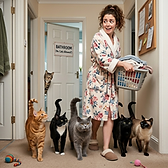
<p class="font_8">The question is usually asked with a degree of flattery attached - as though the cat is making a choice in your favour, selecting you specifically from all available options. I want to address this carefully because the answer is more complicated than it appears and I have thought about it.</p>
<p class="font_8"><br></p>
<p class="font_8">There is attachment in it. I will say that plainly because it is true and because there is no point in being evasive about something that can be observed directly. I follow my agent because I know where he is and I prefer to know where he is. This is not the same as needing him. It is the same as having accurate information about the territory, and he is part of the territory.</p>
<p class="font_8"><br></p>
<p class="font_8">There is also routine. He moves through the house in patterns - kitchen in the morning, the desk by mid-morning, the chair in the afternoon. I know these patterns. Moving with them is not following in any dependent sense. It is the correct navigation of a familiar landscape.</p>
<p class="font_8"><br></p>
<p class="font_8">The warmth question is separate and I acknowledge it. Humans generate heat. The rooms they occupy are warmer than the rooms they have recently left. I follow him to the kitchen partly because the kitchen is warmer when he is in it and partly because there is, statistically, a higher probability of something interesting happening in the kitchen than in the empty hallway.</p>
<p class="font_8"><br></p>
<p class="font_8">What people call following I would call presence management. I am not behind him. I am where I have decided to be, and where I have decided to be is usually nearby.</p>

The question is usually asked with a degree of flattery attached - as though the cat is making a choice in your favour, selecting you specifically from all available options. I want to address this carefully because the answer is more complicated than it appears and I have thought about it...

Why Do Cats Knock Things Off Tables?

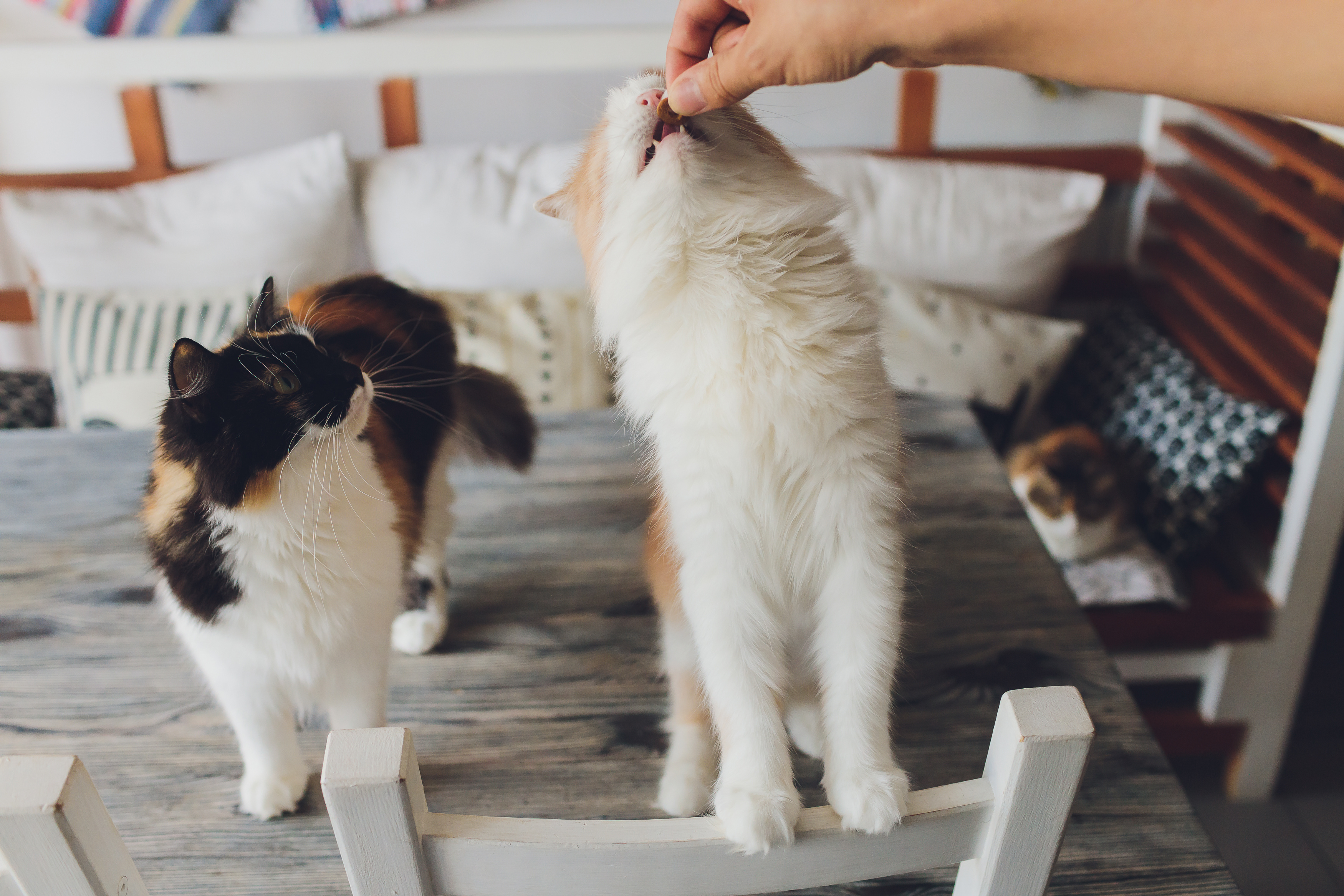
<p class="font_8">Every cat owner knows the moment. The slow turn of the head. The deliberate extension of one paw. The eye contact - sustained, unblinking - as the object begins its journey off the edge.</p>
<p class="font_8"><br></p>
<p class="font_8">George maintains this is entirely justified. He has reasons. Several of them.</p>
<p class="font_8">I want to be clear that I do not do this randomly. The word "randomly" is doing a lot of work in how people describe this behaviour and it is the wrong word.&nbsp;</p>
<p class="font_8"><br></p>
<p class="font_8">There is nothing random about it. There is a ceramic dish on the windowsill at number 29 that I have walked past forty-seven times without touching it. This is because I have assessed the dish and found it, structurally and aesthetically, undeserving of attention. The mug on the kitchen counter is a different matter entirely. Its position is incorrect, its presence is an intrusion into an established spatial arrangement, and the sound it made on the tile floor was, I will be honest, more satisfying than I anticipated.</p>
<p class="font_8"><br></p>
<p class="font_8">What is happening when a cat pushes something off a surface is the application of attention. We are testing the object - its weight, its response, its movement potential. This is the same instinct that makes us paw at prey before committing. The object moves or it does not. If it moves, there is follow-up information available. If it does not, the assessment is complete.</p>
<p class="font_8"><br></p>
<p class="font_8">There is also the question of territory. A surface that is covered with objects is a surface that is not available. I spend a reasonable amount of time in this kitchen and the counter is mine as much as it is hers. The objects on it are not mine.&nbsp;</p>
<p class="font_8"><br></p>
<p class="font_8">Their continued presence is a negotiation and the negotiation is ongoing.</p>
<p class="font_8">I have heard it said that cats do this for attention. I cannot speak for all cats. What I can say is that the effect is consistent and the consistency is noted.</p>
<p class="font_8"><br></p>
<p class="font_8">Mack - Sheffield</p>
<p class="font_8">It makes a noise. The noise is interesting. That is most of it.</p>
<p class="font_8">George has the extended position on this. I broadly agree with the territory point. The attention point I have no comment on.</p>

Every cat owner knows the moment. The slow turn of the head. The deliberate extension of one paw. The eye contact - sustained, unblinking - as the object begins its journey off the edge...

What is the best way to introduce a new cat to my home?

<p class="font_8">Introducing a new cat to an established household is, in George's considered opinion, a matter of extraordinary delicacy that most humans approach with the casual confidence of someone who has absolutely no idea what they are dealing with.</p>
<p class="font_8"><br></p>
<p class="font_8">I want to begin by saying that I understand why they do it. They see a cat. They think: we have a house, there is room, this will be fine. This is the same logic that leads to the bagged chicken. Fine is not a strategy. Fine is what you say when you have not thought it through.</p>
<p class="font_8"><br></p>
<p class="font_8">The territory question is the first question. It is also the second and third question. A home is not just a building - it is a map. Every room has a status. Every chair has a history. The spot by the radiator in the back bedroom is not just warm, it is specifically warm, and it is specifically mine, and the arrival of a stranger into that arrangement is not a small thing. It is a renegotiation of the entire map.</p>
<p class="font_8"><br></p>
<p class="font_8">What they should do - and very rarely do - is allow the new arrival their own room first. One room. Door closed. Let the existing household continue as normal on the other side. What this does is allow both parties to register the other's presence through smell, through sound, through the gap under the door, without the requirement of immediate eye contact. Eye contact too soon is a declaration. Nobody wants a declaration on day one.</p>
<p class="font_8"><br></p>
<p class="font_8">The next stage is the door slightly open. Then a shared space with supervision. Then - and only then - the gradual, careful, mutually agreed expansion of territory. This takes days. Sometimes weeks. Rushing it because you want everyone to be friends is the single most common mistake and I say that with feeling.</p>
<p class="font_8"><br></p>
<p class="font_8">I have never had to go through this myself, as Mack and I arrived together which was its own adjustment and one I consider myself to have handled with considerable grace. But I have watched it happen at number 34 and I have observed the consequences of doing it wrong and they are not trivial.</p>
<p class="font_8"><br></p>
<p class="font_8">Mack - Sheffield</p>
<p class="font_8">He's right. Give them a room. Don't rush it. That's it.</p>
<p class="font_8">I'd add: don't make a fuss. The more you hover, the more unsettled everyone gets. Put the food down, leave the room, let them get on with it.</p>

Introducing a new cat to an established household is, in George's considered opinion, a matter of extraordinary delicacy that most humans approach with the casual confidence of someone who has absolutely no idea what they are dealing with...

bottom of page