
Good. You're Here.
There Are Over Eight Million Cats in British Homes.
Three of them have a website.

Why Do Cats Sleep So Much?
George
Answered by:
I want to address the framing of this question before I answer it, because I think the framing is the problem. "So much" implies excess. It implies that something beyond the normal or advisable is occurring. It is a question that contains a mild criticism, and the criticism is not warranted.
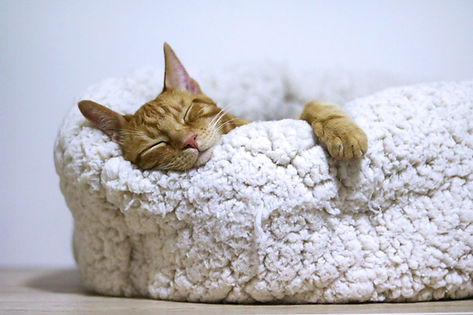
Cats sleep between 12 and 16 hours a day. Some cats, in periods of cold weather or reduced activity, sleep more. This is not a lifestyle choice in the way that humans mean when they use the phrase. It is biology. It is what we are built to do and what our bodies require.
We are predators. Or we retain the physiology of predators, which amounts to the same thing in this context. Predatory activity - even the short, explosive kind that a domestic cat engages in when it has located a toy mouse or a piece of string that needs destroying - is energetically expensive. The body prepares for it, executes it, and then requires recovery time. A lion sleeps 18 to 20 hours a day. I am not a lion, but we share a design philosophy.
The sleep itself is not uniform. There are lighter phases and deeper phases. In the lighter phase, we are aware. The ears are processing the room. The whiskers are doing their work. I can be, to all outward appearances, completely asleep in the chair by the radiator and simultaneously know exactly what is happening in the kitchen. Mack calls this operational rest. I call it the correct use of available time.
The deep phase is where the body does its actual work. Processing, consolidating, maintaining. This is not laziness. This is maintenance. A well-maintained system operates at a higher level than a poorly maintained one. I consider this self-evident but am prepared to explain it further if required.
There is also the question of temperature. In colder months, sleep duration increases. This is thermoregulation. The body is using rest to conserve energy. In warmer months, the pattern shifts - more activity, less sleep, or sleep distributed differently through the day. I have tracked this in myself and find it reliable.
People sometimes worry that their cat is sleeping too much and wonder if it indicates illness. The relevant question is: is this normal for this particular cat? A change in sleep pattern - a cat that was active and has become very still, or a cat that slept normally and now cannot rest - is worth attention. The pattern matters more than the total.
What I find unreasonable is the implication that we should be doing something else with the hours. We have done the something else. We have patrolled the territory, assessed the situation, addressed the food question, confirmed the status of the bird bath. The sleeping that follows is not in addition to the work. It is part of it.
This morning I woke at seven. I ate. I observed the garden for forty minutes and reached conclusions about it. I had a further sleep until eleven. I am now, at the desk, considering this question, which I am taking seriously because the question deserves a serious answer even if its framing required correction.
After this I will sleep again. It will be thorough, purposeful, and entirely adequate to the requirements of the afternoon.
A Vet Would Say:
Adult cats sleep between 12 and 16 hours daily, with senior cats and kittens often sleeping more - this reflects their evolutionary heritage as ambush predators.
• Short, intense predatory activity requires long recovery periods - cats are built to conserve energy between bursts of effort.
• Sleep cycles in cats alternate between REM and non-REM phases; the lighter stage allows rapid response to environmental stimuli even during rest.
• A change in sleep pattern is more clinically significant than total hours - a newly lethargic cat warrants attention.
• Excessive lethargy, difficulty waking, or unusual inactivity should prompt a veterinary check, particularly in older cats where thyroid, kidney, or cardiac conditions can present this way.
• Cold weather and reduced daylight hours may naturally increase sleep duration in indoor cats - this is thermoregulation, not illness.
If your cat has become noticeably less active or harder to rouse than usual, and this represents a change from their normal pattern, a vet check is advisable. Sudden lethargy in older cats in particular can indicate underlying health issues that respond well to early treatment.